極惡劣行:評《黃仁勳傳》作者Stephen Witt的「事後補刀」、倫理崩塌
文/ 夏學理教授(前太師大發言人/所長)
美東時間本(11)月12日,《黃仁勳傳》作者Stephen Witt,在《紐約時報》以《I Wrote Jensen Huang’s Biography. Here’s What Led to His Downfall(https://www.nytimes.com/2026/11/12/opinion/jensen-huang-nvidia.html)黃仁勳因何跌落神壇?傲慢與自負》(https://cn.nytimes.com/opinion/20261113/jensen-huang-nvidia/)為題,厲聲指摘黃仁勳的私德及其處世為人。
Witt此舉,徹底踐踏、粉碎了傳記作者的職守專業倫理。在黃仁勳驟然失勢「垮台」,墜落死蔭幽谷之日,以「我寫過黃仁勳的傳記」為自己背書,透過紐約時報的發佈狠絕地補上一刀。這不是獨家新聞披露,而是落井下石的道德投機,以及事後加碼爆料的倫理崩塌,令人極為反感與不齒:
一、傳記作者的職守倫理:要麼就勇敢寫進去,絕不「選擇性書寫」
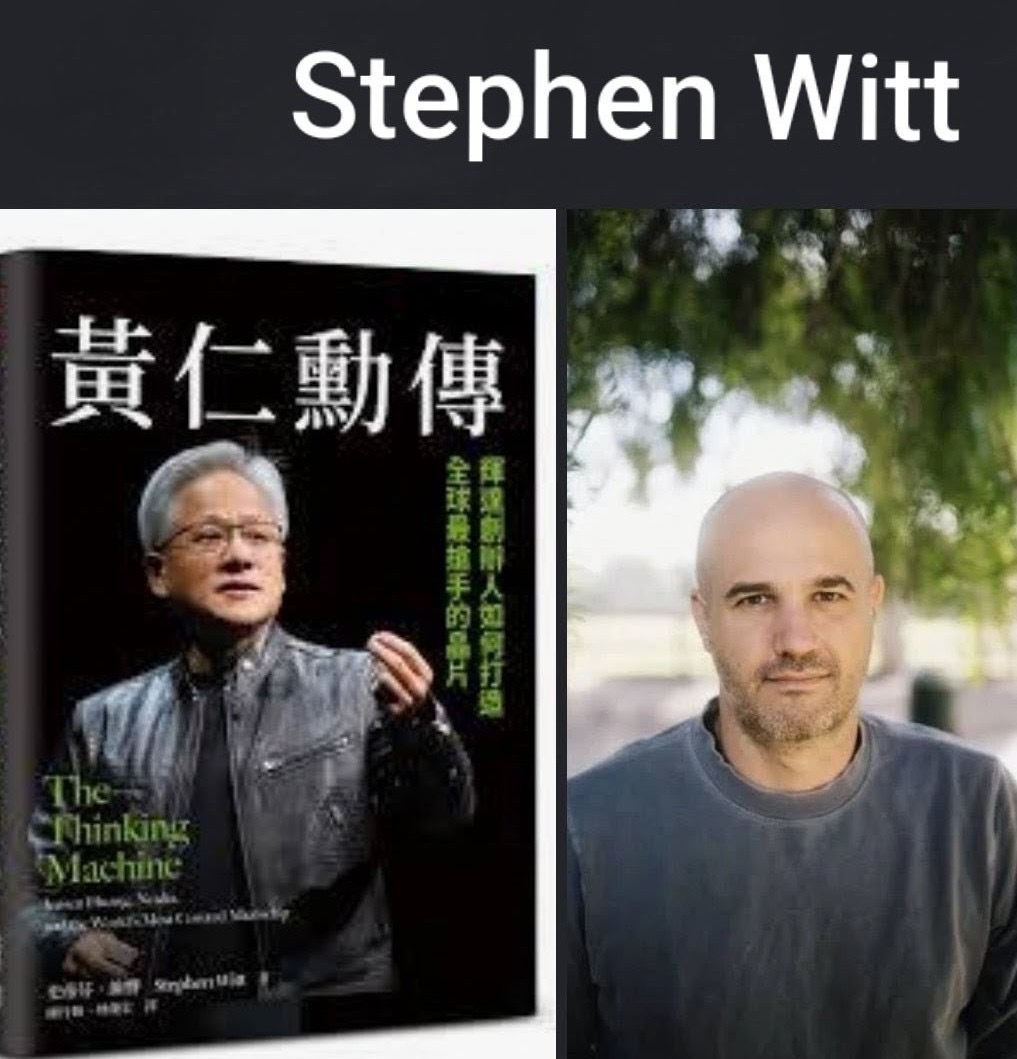
傳記作者不同於時事評論人,Witt撰寫出版了《The Thinking Machine: Jensen Huang, Nvidia, and the World’s Most Coveted Microchip. 黃仁勳傳:輝達創辦人如何打造全球最搶手的晶片》,然而該書對於黃仁勳與黃樂(Alice Huang)、Kimberly Powell的關係、Nvidia內部的緘默文化,要麼隻字未提,要麼輕描淡寫。
但如今,Witt卻挾其「傳記作者」的權威角色,自述依據「某一匿名的Nvidia已離職員工所陳」、引用所謂「政府情報部門的說法」、轉述「紐約時報及其他媒體的報導」,來火上加油地趁亂指摘黃仁勳。試問:這些「幽靈材料」在他寫書時難道不存在?如果存在或是早有線索,當時為何不追、不寫?如果並不存在,今日的Witt又憑什麼以「我是黃仁勳傳記的作者」,來強調自己的權威性及可信度?
基於自律克制與證據原則,傳記作者本就不該將未經核實或無法證實的傳聞寫進書裡。當Witt選擇為黃仁勳 – 一個「仍在世的活生生人物」立傳時,其所掌握的資料、線索、判斷,理應盡其所能地完整呈現在書裡。至於待證事項,Witt自也可在書中註明「曾聽聞有此一說,但未能核實或證實」,而無須完全略去。
易言之,若在書裡連個最起碼的註腳都付之闕如,則現在Witt所主張的當時「無法證實」,概只是事後託詞;反之,若有了註記卻又不予以鋪陳展開,則表示當時的Witt,顯已主動選擇保持沉默。究其實,無論是哪種情況,Witt都欠廣大讀者一個解釋。
嘆如今,極其可怕且極盡虛偽可惡的是:Witt竟然在紐時的發文裡,指摘黃仁勳於2023年與他首次見面時,「極力塑造謙遜的形象」,而Witt還特意強調:自己在當時,已經「sensed this deference」- 「感受到了」黃仁勳的下屬在黃身邊時那種諂媚的笑聲、「感受到了」在黃仁勳離開房間後,下屬們低聲嘟囔的小話。
早在2023年,Witt就如先知般地「都能感受到」,然卻隻字未將那份至為關鍵的「感受」寫進傳記。現在黃仁勳出了事,他竟突然高高捧起「當年的感受」,且「單憑『一位前員工』的說法」,即聲嘶力竭地猛烈刺向黃仁勳。這絕不是傳記作者的嚴謹,這是個無能、鄉愿、「選擇性書寫」的投機份子,為自己扔出一記極其下作的敲門磚。
二、「書中迴避、事後加碼」的本質:用沉默換取貼近,用事後諸葛博取下一個機會
從其文章自述的採訪關係來看,Witt的背後邏輯不難推敲:寫書時,需要黃仁勳的全力配合、需要Nvidia開綠燈的採訪管道,所以不能寫得太絕;而今黃仁勳驟然失勢,無須再瞻前顧後地思量合作關係,於是放開手腳、肆無忌憚地對黃仁勳一陣瘋砍。
合理推斷:Witt把傳記作者的獨立性,當成了可以「隨時間和對象處境」予以動態調整的變數。尤其他發文裡的那句「I should write a sequel: ‘The What-Were-You-Thinking?! Machine’. 我應該寫一部續作:‘你當時到底在想什麼?!機器’」最為惡質。一個自重、嚴謹的傳記作者,絕不會以幸災樂禍的語調,來抨擊、詆譭自己的筆下人物。這不是單純評論,這是借助風暴、踩著「傳主的屍首」,還意想製造話題、推銷續集。
三、時機的惡意:在低谷之日落井下石
Witt極盡卑劣地選擇在黃仁勳驚爆婚外情、頹然請辭一切職務的當口,以「我為黃仁勳寫傳」、「我早就察覺」的先知姿態發文攻擊。如果Witt真有道德勇氣,就該在黃仁勳聲勢鼎盛、如日中天之時挺身提出質疑;如果他握有實證,更應直接寫入傳記。
但Witt卻是在黃仁勳最脆弱的時候出腳跟風踐踏,十足是個典型的文人「敗類」所為的算計。理由是:一個傳記作者,明知有問題卻不寫,反利用自己對傳主的近身觀察、利用寫書立傳時建立的信任與管道,在對方失勢時,據以作為攻擊素材,讓專業信用蕩然無存。
更何況,傳記的讀者群在購書時,期待的是由作者全心力提供的最完整資料及判斷;反觀Witt,直至風暴連天的今日,才透過紐時,以「我早就感受到」補刀,等於自行承認在其書中呈現的黃仁勳根本不完整。這種被Witt親予過濾、篩選的重大傳主落差,對讀者而言,是一種超額溢收費用的「公眾欺瞞」、「公然背信」。
四、這不是「觀點評論」可以豁免的
或許有人會認為,Witt發文在紐時的「Opinion版」,是屬個人觀點評論。但Witt並不是一般投書大眾,更非匿名網民,在他刻意標榜自己是《黃仁勳傳》作者的同時,他也在消費、挪用傳記作者的身份,因此,Witt就該承擔傳記作者的職守專業倫理 – 在書中完整呈現,於事後不補刀、爆料。傳記作者絕不可拿「寫書階段刻意保留、不寫入傳記」的一手觀察,趁傳主落難時,拿出來肆意攻擊。這不是「言論自由」問題,這是「職業操守」問題。
結語
Witt做了一個極其惡劣的負面操守示範 -「書中迴避、事後爆料」,讓傳記的餘波成為一種埋伏:你永遠不知道那個坐在你對面、寫著筆記的人,是在為你立傳,還是在為你日後的垮台,預做收集彈藥的準備?今日Witt所做的絕非「說出真相」,因為真相早該被寫進書裡。「事後才血淋淋地補砍一刀、把傳主當成死靶子來活打」,若此風可行,則還真不如委由AI執筆!
Atrocious Conduct: On Stephen Witt, Author of The Thinking Machine, and His “Post-Hoc Stabbing”—A Collapse of Ethics
Dr. Prof. Jerry H. Hsia
Former Spokesperson / Director, National Taiwan Normal University
On November 12th (U.S. Eastern Time), Stephen Witt, author of the biography of Jensen Huang, published an opinion piece in The New York Times titled “I Wrote Jensen Huang’s Biography. Here’s What Led to His Downfall,” sharply attacking Huang’s private conduct and personal character.
In doing so, Witt thoroughly trampled upon and shattered the professional ethics incumbent upon a biographer. On the day Huang suddenly fell from grace and “collapsed,” descending into the valley of the shadow of death, Witt used “I wrote Jensen Huang’s biography” as his own endorsement, and through publication in The New York Times delivered a ruthless, final stab. This is not exclusive news reporting; it is opportunistic moralizing that kicks a man when he is down, and an ethical collapse in the form of post-hoc pile-on revelations. It is deeply repugnant and contemptible:
I. A Biographer’s Professional Ethics: Either Write It In Bravely, or Never Engage in “Selective Writing”
A biographer is not a current-affairs commentator. Witt wrote and published The Thinking Machine: Jensen Huang, Nvidia, and the World’s Most Coveted Microchip. Yet in that book, Huang’s relationships with Alice Huang and Kimberly Powell, and Nvidia’s internal culture of silence, are either not mentioned at all or treated only in passing.
But now Witt, leveraging his authority as “the biographer,” claims to rely on “what a certain anonymous former Nvidia employee said,” cites so-called “statements from government intelligence agencies,” and relays “reports from The New York Times and other media,” to add fuel to the fire and seize the chaos to attack Huang. One asks: did these “ghost materials” not exist when he was writing the book? If they existed or there were leads at the time, why did he not pursue or write about them then? If they did not exist, then by what right does Witt today invoke “I am the author of Jensen Huang’s biography” to assert his authority and credibility?
On the principles of restraint and evidence, a biographer should not put unverified or unconfirmable rumors into a book. When Witt chose to write the biography of Huang—a “living, breathing person”—the materials, leads, and judgments he possessed should have been presented as completely as possible in the book. As for matters still requiring proof, Witt could have noted in the book that “I heard such a claim but could not verify or confirm it,” rather than omitting it entirely.
In other words, if there is not even the most basic footnote in the book, then Witt’s current claim that he “could not confirm it at the time” is merely a post-hoc excuse; conversely, if there was a note but no elaboration, then Witt clearly chose to remain silent at the time. In truth, either way, Witt owes the reading public an explanation.
Alas, what is truly appalling and utterly hypocritical is this: in his Times piece, Witt criticizes Huang for, when they first met in 2023, “Huang and his handlers were pushing the idea that he was a humble man”, and Witt even emphasizes that he himself at the time already “sensed this deference”—“sensed” the sycophantic laughter of Huang’s subordinates when they were around him, and “sensed” the little things mutterings of those subordinates after Huang left the room.
As early as 2023, Witt—like a prophet—“could sense” it all, yet did not write a single word of that crucial “sensing” into the biography. Now that Huang is in trouble, Witt suddenly elevates “what he sensed back then,” and “on the sole basis of ‘one former employee’s account,’” frantically and ferociously thrusts at Huang. This is not a biographer’s rigor; this is an incompetent, craven opportunist engaged in “selective writing,” tossing out for himself an utterly despicable敲门砖—a mere stepping stone.
II. The Essence of “Avoidance in the Book, Escalation After the Fact”: Trading Silence for Access, Trading Hindsight for the Next Opportunity
Judging from the interview relationship Witt describes in his own article, his underlying logic is not hard to infer: while writing the book, he needed Huang’s full cooperation and needed Nvidia to green-light interview access, so he could not write too harshly; now that Huang has suddenly fallen, there is no need to weigh collaboration any longer, so he lets loose and furiously hacks away at Huang without restraint.
A reasonable inference: Witt treated a biographer’s independence as a variable to be dynamically adjusted “according to time and the subject’s circumstances.” Especially odious is the line in his piece: “I should write a sequel: ‘The What-Were-You-Thinking?! Machine.’” A self-respecting, rigorous biographer would never, in a gloating tone, attack and defame the subject of his own pen. This is not mere commentary; this is riding the storm, stepping on “the subject’s corpse,” and still dreaming of generating buzz and selling a sequel.
III. The Malice of Timing: Kicking a Man When He Is Down
Witt chose, in the most despicable manner, to publish his attack at the very moment Huang was engulfed in a extramarital-affair scandal and had resigned all his positions in disgrace, adopting the prophetic posture of “I wrote Huang’s biography” and “I sensed it long ago.” If Witt truly had moral courage, he should have stepped forward to raise doubts when Huang was at the height of his power and influence; if he had solid evidence, he should have written it directly into the biography.
But Witt instead joined the crowd to trample Huang when he was most vulnerable—the calculation of a typical literary “scum.” The reason: a biographer who knew there were problems but did not write about them, and instead used his close-up observation of the subject and the trust and access built while writing the biography as attack material once the subject fell, leaves professional credibility in total ruin.
Moreover, readers of a biography expect, when purchasing the book, the most complete materials and judgments the author can provide with full effort; by contrast, Witt—only now, in today’s storm—uses The Times to stab with “I sensed it long ago,” which amounts to admitting that the Huang presented in his book was fundamentally incomplete. This major gap between subject and portrayal, filtered and screened by Witt himself, constitutes, for readers, a “public deception” and “open breach of trust” that overcharges them.
IV. This Is Not Exempted by Being “Opinion Commentary”
Some may argue that Witt’s piece appeared in The Times’ “Opinion” section and is therefore personal opinion commentary. But Witt is not an ordinary letter-writer, still less an anonymous netizen. At the same time he deliberately advertises himself as the author of The Biography of Jensen Huang, he is also consuming and appropriating the identity of “biographer.” Therefore, Witt should bear the professional ethics of a biographer: present completely in the book, and refrain from post-hoc stabbing or leaking afterward. A biographer must never take first-hand observations “deliberately withheld and left unwritten during the book-writing stage” and, when the subject falls on hard times, bring them out to attack him wantonly. This is not a question of “freedom of speech”; it is a question of “professional integrity.”
Conclusion
Witt has set an extremely atrocious negative example of conduct—“avoidance in the book, leaking after the fact”—turning the aftermath of a biography into a kind of ambush: you never know whether the person sitting across from you, taking notes, is writing your biography or collecting ammunition in advance for your future downfall. What Witt has done today is by no means “telling the truth,” because the truth should have been written into the book long ago. “Stabbing only afterward, bloodily, and treating the subject as a dead target to be shot at live”—if such a practice is acceptable, then it would truly be better to have AI hold the pen!
《黃仁勳傳》作者為何在黃仁勳失勢後批評他?
《黃仁勳傳》作者Stephen Witt於美東時間11月12日在《紐約時報》發表文章,嚴厲批評黃仁勳的私德與處世為人。Witt此舉被認為踐踏了傳記作者的專業倫理,在黃仁勳失勢之際,利用其傳記作者的身份,透過《紐約時報》發文補刀。文章指出,Witt在撰寫傳記時,對於黃仁勳與特定人士的關係、Nvidia內部的緘默文化等關鍵資訊選擇性書寫或輕描淡寫,但如今卻引用匿名離職員工及所謂政府情報部門的說法,來指控黃仁勳。作者認為,若這些資訊在寫書時已存在,Witt當時為何不寫;若不存在,則今日的批評缺乏依據,且其聲稱在2023年見面時就已「感受」到黃仁勳的虛偽,卻未寫入書中,如今卻以此指控黃仁勳,是事後諸葛的道德投機行為。
Stephen Witt在《紐約時報》的文章標題是什麼?
Stephen Witt在《紐約時報》的文章標題為《I Wrote Jensen Huang’s Biography. Here’s What Led to His Downfall》,中文副標題為「黃仁勳因何跌落神壇?傲慢與自負」。
作者認為Stephen Witt在撰寫《黃仁勳傳》時有哪些問題?
作者認為Witt在撰寫傳記時,對於黃仁勳與黃樂、Kimberly Powell的關係,以及Nvidia內部的緘默文化等,選擇性書寫或輕描淡寫,並未將關鍵資訊完整呈現。作者質疑Witt在書中迴避了重要細節,卻在事後才藉由《紐約時報》發文進行批評。